

If you have been to Shanghai and are trying to figure out where local people go to eat at night, then you have probably also experienced how intense the search can be for such places. Shanghai comes alive at night and seems to be more than it was during daylight hours. Night markets in Shanghai offer an experience all unto themselves with their rows of lights; smoke from cooking skewers; vendors screaming out deals in their local dialect Shanghainese; and countless people just strolling around and enjoying themselves. Whether you have been to China before (but have never attempted the nightlife) or this will be your first time in China, this guide on the night markets in Shanghai provides an incredible, detailed overview of the most recommended locations and gives you the information to begin planning rather than simply browsing through the night markets’ locations without knowing where to go.
What I aim to do in this post is to provide you with more detail as to what you can expect when you go to the night markets in Shanghai. I have compiled detailed information on which night markets are worth going to; what types of food you can eat at each night market; where the various night markets are located; and at least one nugget of knowledge that most locals do not share until you show up for your first time at night markets in Shanghai. If your goal is to maximize your time in Shanghai while minimizing the amount of money you spend on overpriced tourist watering holes, keep reading!
Why Night Markets in Shanghai Hit Different
I’ll admit it — I thought low of markets the first time I went to a Shanghai night market. I’d been to enough of those sorry “markets” in other cities that were just the same five vendors pushing key chains and knock-off sneakers. Shanghai isn’t like that.
What makes these markets wild is the variety and that they’re just as much for locals as they are for tourists. You can find stinky tofu (yes, it smells like it sounds, and yes, you should eat it), handmade accessories, vintage clothes, and genuinely good dumplings for less than a dollar. The energy at night is very different from daytime exploring — more spontaneous, more local, more vibrant.
The other thing is, while there are clearly definite markets, the night market scene is much more dispersed over the Shanghai landscape. This is a big city, and different neighborhoods take on very different characters. A market at Jing’an feels nothing like a market at Yangpu or Pudong. That’s even more reason to put a little thought in beforehand.
The Markets You Actually Need to Know About
Here’s a quick overview of some of the most visited night markets and what they’re best for:
Market Name Best For Neighborhood Vibe Yuyuan Night Market Street food, snacks, atmosphere Huangpu Touristy but iconic Wujiaochang Night Market Local food, budget shopping Yangpu Very local, less English Shouning Road Seafood, late-night dining Huangpu Gritty, authentic Tianzifang Night Walk Indie crafts, cocktails Xuhui Artsy, young crowd Qipu Road Cheap clothing, wholesale Hongkou Chaotic, great deals
Each has its own character. Yuyuan gets the most foot traffic and yes, it’s a bit of a tourist circus in spots, but the xiaolongbao from the side stalls makes up for it. Shouning Road is where I’d send anyone who wants to eat like a local — the seafood is grilled right in front of you and it’s loud and messy and completely worth it.
What to Eat (And What to Skip)
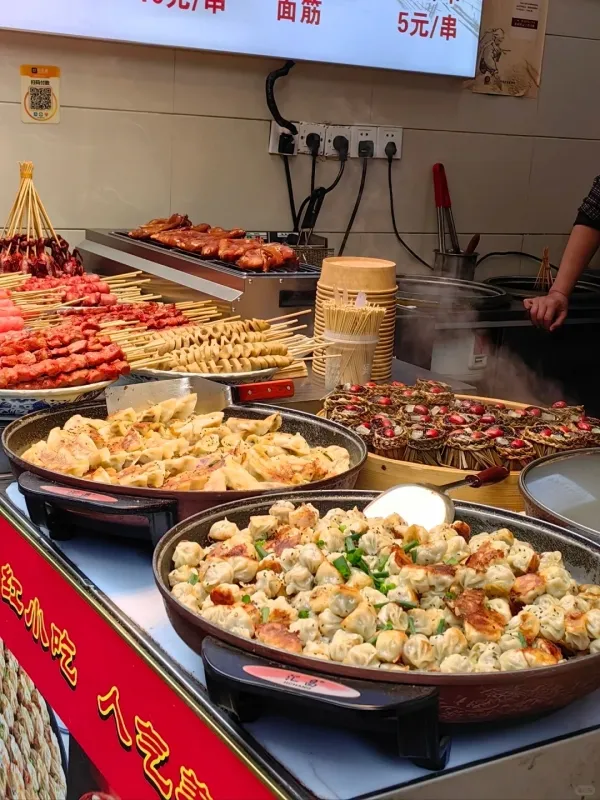
Food is the main attraction here, honestly. I’ve been noshing around a fair number of these markets, and some things stand out.
Jianbing — a savory crepe with egg, crispy wonton, hoisin sauce, and chili paste, you’ll see it everywhere and it’s almost always delicious. The vendors cranking these out work quickly, and watching the whole thing come together in about 90 seconds is half the fun. Get in for breakfast or a late-night snack, it’s the kind of thing you’ll think about for weeks after you get home.
Sheng Jian Bao, pan fried pork buns with a thin crispy base and soup-filled interior, are a Shanghai specialty. You’ll find the jiaozi of the night market even better than in a sit-down restaurant because they’re made in high volume and the pans never cool down. The trick is biting the side first, otherwise lose the broth. You’re welcome.
Things to skip: pre-packaged snacks at inflated prices near the main tourist entry points, and “authentic traditional recipe” in English with a laminated photo menu. Almost always a red flag.
Practical Info: Getting There and Getting Around
Most of Shanghai’s night markets are well-connected by metro. The system is clean, cheap, and runs until around 11pm on weekdays and a bit later on weekends. For Yuyuan, you want Yuyuan Garden Station on Line 14. For Wujiaochang, it’s Wujiaochang Station on Line 10.
A few timing notes that I wish I’d known earlier:
-
Arrive after 7pm. Most vendors don’t fully set up until then, and the atmosphere doesn’t hit its peak until closer to 8 or 9.
-
Weekends are more crowded, obviously, but also more lively — more street performers, more vendors, more everything.
-
Bring cash. While WeChat Pay and Alipay dominate in China, some smaller vendors still prefer cash, and foreigners often run into friction setting up mobile payment apps. Having a few hundred yuan in small bills saves headaches.
If you’re planning a broader shopping day — not just night market browsing but actual mall shopping — it’s worth knowing that areas like Cloud Nine in Shanghai are popular transit-hub malls that are easy to hit earlier in the day before heading to the markets in the evening. Similarly, if you’re interested in outlet shopping, the Shanghai outlet options are worth considering as a daytime activity that pairs well with an evening market visit.
A Few Things Nobody Tells You
Bargaining is part of it, but not always required. At clothing and accessories stalls, yes, you should bargain — i.e. start your negotiations at 50-60% of the price they are asking for. At food stalls, no. The prices are already low, and not the done thing.
The smell is part of it. Stinky tofu is fermented and you can smell it from a block away. Don’t let it turn your stomach,- if you can overcome it and actually try it, you may be surprised. I was. It tastes a lot better than it smells, and the crispy deep-fried version is seriously addictively delicious.
Language isn’t as big a barrier as you might think. Most vendors are used to dealing with tourists by now. Pointing works. Google Translate camera mode works even better. The interaction is usually brief and transactional in a friendly way — smile, point at what you want, hold up fingers for quantity.
Your phone battery will die faster than you might expect. Between maps, translation apps and photos, you’ll smash through your battery charge faster than you’d think. A small portable charger is one of those things that sounds pointless until it isn’t.
Making the Most of Your Shanghai Evenings
Shanghai nights are truly one of the best things about any trip to China — not because they’re glamorous (although sometimes they are), but because they feel that way. The markets drop you completely into the heart of local life in a way that museums and sights simply can’t.
Here’s my advice: don’t even think about trying several markets in one night. Pick one, plan to spend two or three hours there, eat too much, and wander. The best parts of the markets seem to be the things you didn’t plan. There’s a street performer whose talents stop you in your tracks, a hawker who is adamant that you must try something you’ve never even heard of, a conversation made because someone wonders where you are from.